
 Pin it
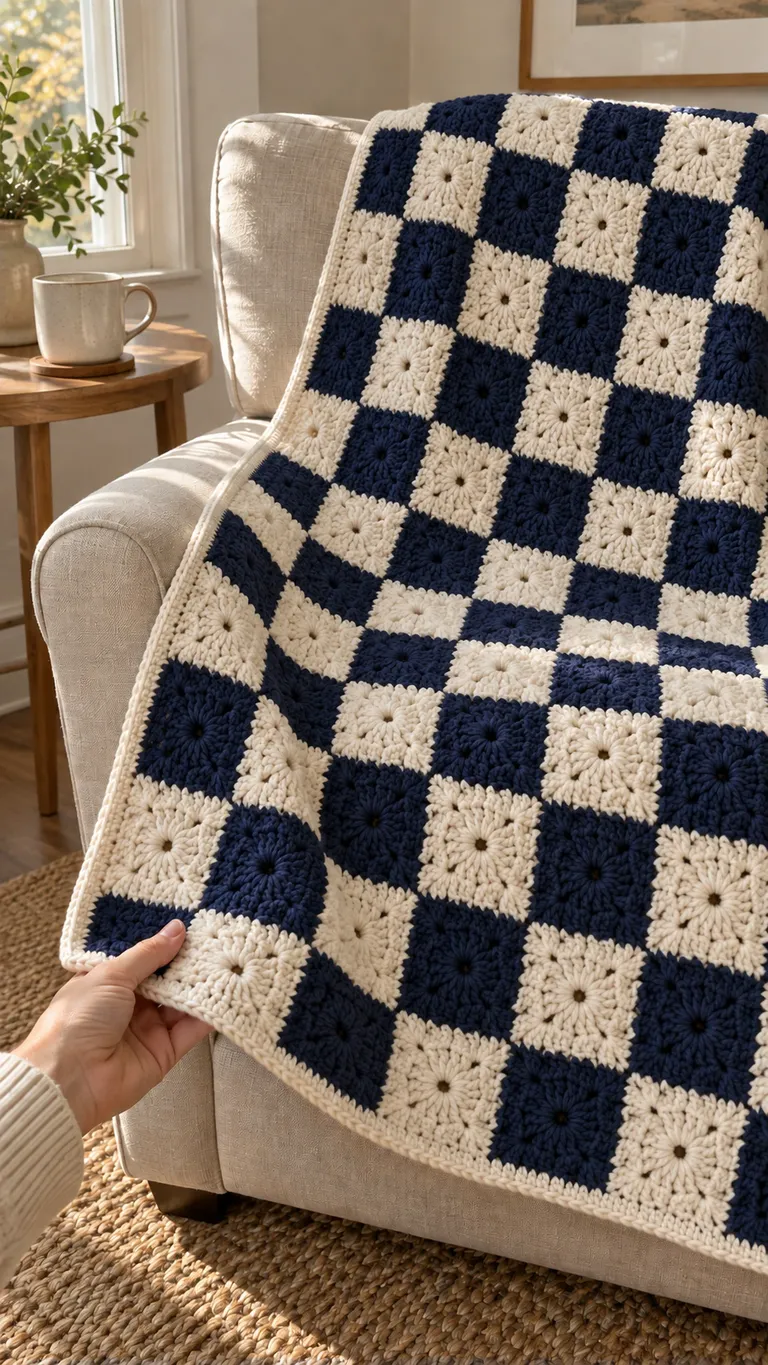
A checkerboard throw makes a strong pattern from two colors. Navy gives the grid its depth; warm ivory keeps it light against a linen chair. The narrow pale edge frames the squares without introducing another repeat.
About this design: The artwork is an AI-generated design illustration. This is a layout and sampling guide, not a tested pattern for the pictured throw. Use a complete crochet pattern for the squares, joins and border. The image and generated footage do not establish stitch counts or a reliable technique.
Choose the square before counting the blanket
Select a complete square pattern that produces the texture and drape you want. Read its joining and finishing instructions before making a batch. This guide uses US crochet terminology. The Craft Yarn Council abbreviation list identifies common terms; the selected pattern should define any special stitches.
Make a navy square and an ivory square with the actual yarn and hook you intend to use. Compare their dimensions and feel after following the yarn's care instructions. Even colors from the same range deserve a sample. A square that finishes noticeably smaller should be investigated before joining, rather than stretched to fit its neighbors.
Draw the alternating grid
Sketch one box for each square. Start with navy in the upper-left box and alternate across the first row. Begin the next row with ivory, then keep alternating. Every square should meet the opposite color along its four sides; matching colors meet diagonally.
Choose the number of rows and columns from your measured samples and the intended coverage of the chair. A six-column, eight-row layout contains 48 squares: 24 navy and 24 ivory. This is a layout example, not a size or yarn-quantity recommendation.
If both dimensions contain an odd number of squares, one color needs one extra square. For example, five columns by seven rows gives 35 squares. Starting with navy in the upper-left corner requires 18 navy and 17 ivory squares. All four corners will then be navy. Count the colored boxes on your own drawing before making the full set.
Test the joins as part of the design
Join a small two-by-two group with the method specified by your pattern. This shows both a straight seam and the point where four corners meet. Check whether the joining yarn creates a visible line across the checkerboard and whether that line suits the effect you want.
Measure the joined sample after normal care and drying, without pulling it wider. Use the pattern's sizing method and allow for the outer border. Multiplying the width of a loose square can miss the effect of the seams. Keep your measurements with the hook size and yarn labels.
Keep rows in order during assembly
Lay out the squares with the intended side facing up and check each horizontal and vertical neighbor. Photograph the full arrangement. Label rows and mark the same starting edge on each row before stacking the pieces for storage. A numbered paper label attached with a removable marker is enough.
Check a row against the drawing before joining it to the next one. When a row is turned around during handling, the starting color can become easy to confuse. Also keep any directional texture oriented as the pattern requires. Color order and stitch direction are separate checks.
Sample a quiet outer edge
A narrow ivory border gives this concept a simple outline. Try the chosen edging on the joined sample, including a corner, before committing to it. Follow the pattern for stitch placement along sides, joins and corners; the illustration cannot provide a dependable number of edge stitches.
Look at the sample flat and draped over the chair. If the edge cups or waves, check stitch placement and tension before adding another round. Keep the finished project notes together: pattern source, color grid, square counts, joined measurements, hook size and actual yarn use. Those records make a repeat project far easier to plan.
Before You Start
Keep the color grid and joined-sample measurements with your pattern notes.
Pattern FAQs
Is this an exact pattern for the pictured throw?
Standards & Sources
Terms and sizes in this pattern follow these standards.