
 Pin it
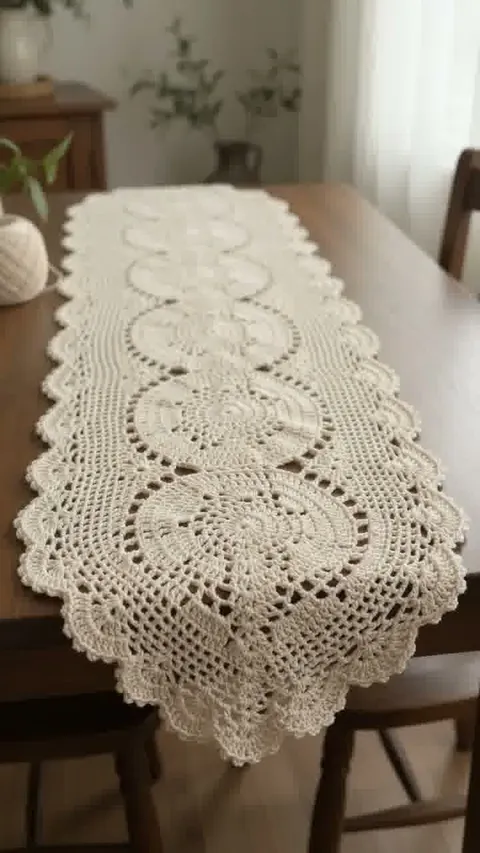
A line of pale lace medallions brings a soft pattern to a wooden tabletop. Scalloped edges repeat the curves of the center motifs without covering the entire table.
About this guide: The Reel and cover are AI-generated design illustrations. This is a planning and sampling guide, not a tested pattern for the pictured project. US crochet terminology is used.
Choose a complete runner pattern
Look for a pattern that explains the center medallions, their connections and the outer edging together. Similar circular motifs can have very different joining points. The illustration provides a design idea rather than a stitch chart. Read the entire pattern before substituting yarn or changing the number of repeats.
Measure the surface and intended placement
Measure the tabletop and decide whether the runner should end within its edges or hang beyond them. Note where dishes and decorative objects normally sit. Use the complete pattern’s repeat measurements to plan a balanced length, allowing for both end treatments. Do not assume that every extra medallion adds its full unjoined diameter.
Sample connected motifs
Make at least two adjacent motifs and their connection using the intended yarn and hook. Include a section of the edging if the pattern permits a representative sample. Compare the width of the joining area with the motif centers. Tight connections can pull a runner inward, while loose joins may leave uneven gaps between the circles.
Check the scallops after care
Follow the yarn label and pattern when caring for the sample. Let it dry completely before measuring it in a relaxed state. Arrange the scallops evenly without forcing the fabric wider to conceal a stitch-count error. Check that both long edges have the same repeat rhythm and that the ends mirror one another where the pattern calls for symmetry.
Finish for decorative use
Weave in yarn ends using a method suited to the fine fabric and inspect each joining point. Keep the runner clear of open flames and do not treat decorative lace as heat protection for hot cookware. Follow its yarn-label care instructions and store it away from sharp objects that could catch the openwork. Save the repeat count, sample measurements and yarn details for later repairs.
Terminology reference
Check unfamiliar US terms in the Craft Yarn Council crochet abbreviation reference. The selected pattern’s own key takes precedence for special stitches.
Before You Start
Keep the complete construction pattern, sample measurements and color notes together.
Pattern FAQs
Does this include an exact pattern for the pictured project?
Standards & Sources
Terms and sizes in this pattern follow these standards.