
 Pin it
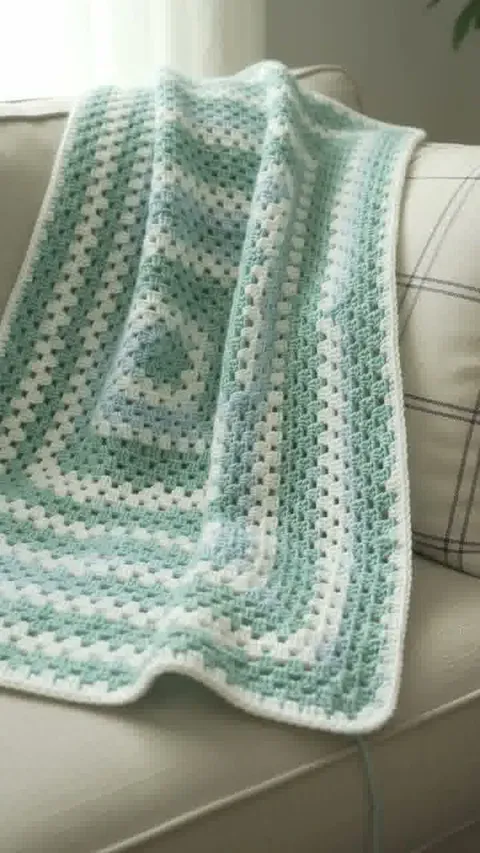
Seafoam and pale blue give this granny-style throw a soft coastal palette. White bands separate the colors and keep the corner turns easy to see.
About this guide: The Reel and cover are AI-generated design illustrations. This is color and sampling guidance, not a tested pattern for the pictured blanket.
Choose the construction before the colors
Seafoam, pale blue and white can form straight stripes or bands worked around a center. The illustrated throw uses bands that turn corners, so start with a complete granny-rectangle or granny-square blanket pattern if you want that general arrangement. A straight-row granny-stripe pattern has different edges and cannot simply be substituted round for round.
This guide uses US crochet terminology. Read the chosen pattern’s key before working its clusters and corner spaces. Common terms are collected in the Craft Yarn Council abbreviation reference. Keep the actual pattern beside the color plan; a color change does not change the required stitch sequence.
Compare the three yarns together
Make a sample that includes all three colors, using the yarn weight and hook recommended by your selected pattern. The two colored yarns should remain distinguishable in the room where the throw will sit. White separators can make a very pale blue visible, but a wide white band also changes the balance of the palette.
Write each color beside its row or round number. A small paper chart is easier to repeat than a memory of the photograph. If you change the number of rounds in a band, mark the change on the chart before continuing.
Check the corners as the fabric grows
Work enough of the pattern to include complete corners. Lay the sample down without pulling it square. Look for a corner that curls upward, an edge that waves, or a section that has been stretched to match its neighbor. Check stitch counts and corner instructions before making a tension adjustment.
For a blanket worked outward from a center, later rounds are longer and use more yarn. Equal numbers of rounds do not mean equal yarn quantities. Record the yarn used in the sample and use the selected pattern’s sizing and yardage guidance when planning a larger version.
Measure for the actual sofa
Use a tape measure on the sofa to choose the desired coverage and drop. Care for the sample as directed on the yarn label, let it dry fully, then record its relaxed dimensions. Allow for the final edging when comparing the sample with your target.
Drape the sample over a sofa arm as well as laying it flat. Open clusters may look balanced on a table but stretch differently under their own weight. Choose the fabric feel you want before committing to the entire throw.
Keep the edge quiet
A narrow white edging gives the color bands a clear finish. Try the proposed edging on a sample that includes a corner and follow the pattern for spacing. More border rounds will not automatically correct an uneven blanket; check the fabric beneath them first.
Weave in the color-change ends with a method suited to the yarn. Save the yarn labels, hook size, color chart and care notes together. Those notes are the dependable starting point for a matching piece later.
Before You Start
Use the complete pattern for construction and keep a separate written color chart.
Pattern FAQs
Is this a straight-row granny-stripe pattern?
Standards & Sources
Terms and sizes in this pattern follow these standards.