 Pin it
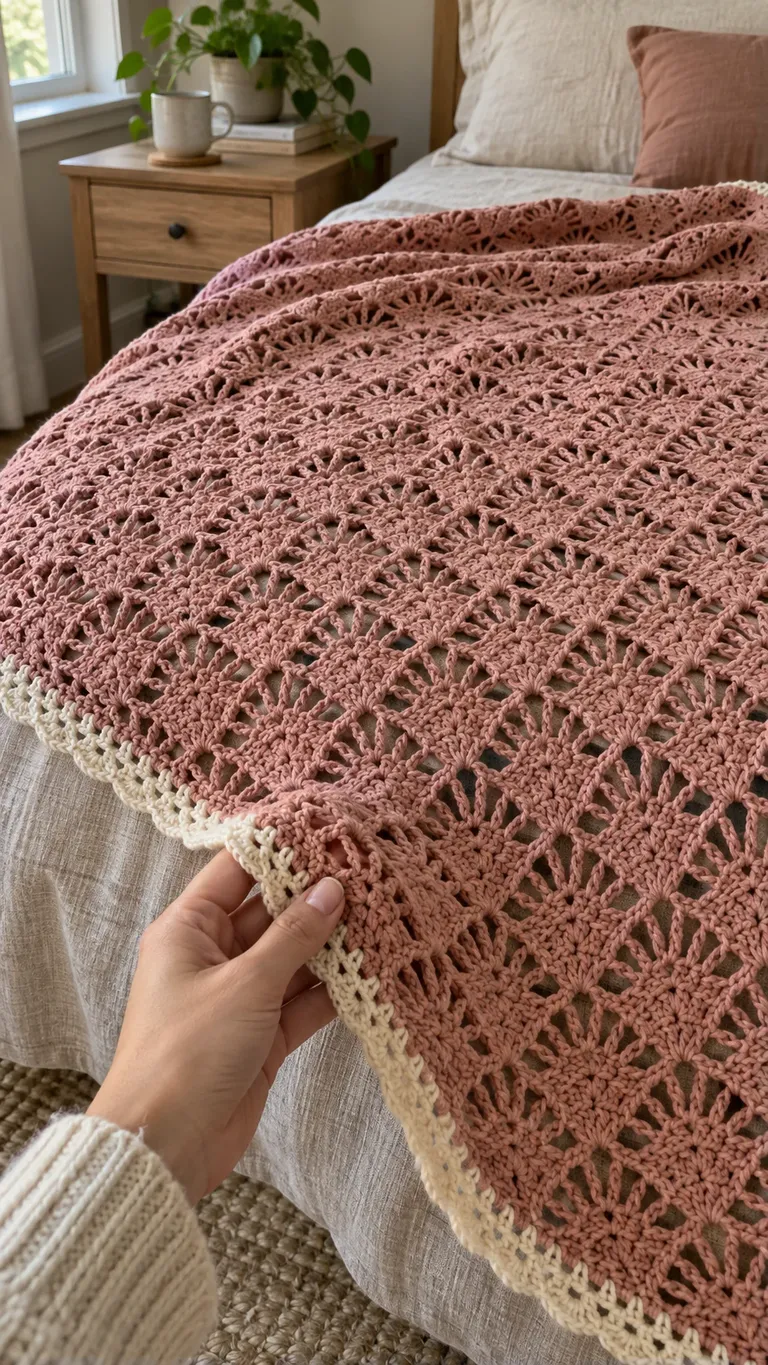
Open spaces change how a crochet blanket looks on a bed. The linen beneath becomes part of the design, while the raised rows catch the light. In this dusty-rose concept, a narrow cream edge outlines the fabric without competing with the openwork.
About this design: The artwork is an AI-generated design illustration. This article is a sampling and layout guide, not a tested pattern for the pictured blanket. Use a complete openwork pattern for stitch counts, repeats, shaping and edging. Generated close-ups do not establish a reliable crochet technique.
Read the full repeat before choosing a size
Choose an openwork blanket pattern with clear row instructions and a stated stitch multiple. Check whether it uses US or UK terms. This guide uses US terminology; the Craft Yarn Council abbreviation list is a useful reference for common terms. Special shells, clusters and other named stitches must follow the selected pattern's definitions.
Mark where the repeat starts and ends, including any setup stitches and edge stitches outside it. The Council's pattern-reading guide explains repeated instructions and chain spaces. A space beneath a chain is a different insertion point from the top loops of an individual stitch; follow the location specified in the pattern.
Make a sample large enough to reveal the fabric
A tiny strip can show the yarn color but may not show how the openwork behaves. Work several complete horizontal and vertical repeats, with the recommended hook and actual yarn. Include the pattern's side edges. Record the hook size, yarn details and number of complete repeats so you can reproduce the sample.
Look for a consistent rhythm across the rows. Count stitches or repeat units at the points specified by the pattern, and check the first and last repeat separately. If the sample narrows, widens or twists unexpectedly, resolve the count or placement issue before making a larger piece. Do not rely on stretching to conceal a mistake.
Assess the drape after normal care
Wash or otherwise care for the sample according to the yarn label and pattern guidance. Let it dry fully before measuring. Place it flat without pulling the openings wider, then note its width and height. Keep a photograph beside the measurements to record how open the fabric looks in its relaxed state.
Lay the sample over the same bedding you plan to use. Lift one edge and let it fall naturally to compare softness, weight and how readily it folds. If you want a different result, make another labeled sample with a change supported by the pattern. Compare the dry samples side by side rather than relying on memory.
Choose rose and cream against the bedding
A pale bedcover remains visible through the holes and can make dusty rose appear lighter. A darker layer creates stronger contrast in each opening. Try the sample against the actual linen in both daylight and evening light before committing to the full blanket.
Test the cream border yarn with the rose yarn. Similar thickness, compatible care instructions and an edge that bends comfortably with the main fabric matter as much as the color pairing. Work a short section of the specified border on the sample; loose strands held beside it do not show the finished relationship.
Plan dimensions in whole repeats
Measure the part of the bed you want to cover, including the intended drop. Use the dry sample and the chosen pattern's sizing method to calculate how many complete repeats fit that width. Keep the setup and edge stitches separate from the repeating section. Follow the pattern's foundation-chain formula rather than deriving a chain count from the illustration.
Allow for the border in the finished dimensions. If the closest complete repeat makes the blanket slightly larger or smaller than the target, compare those options on a sketch before starting. Check length against complete vertical repeats as well, so the final row is compatible with the edging instructions.
Sample the edge before finishing the blanket
The narrow cream outline in this concept is a visual choice. Use an edging designed for the selected openwork pattern, particularly where stitches are placed along row ends or around corners. Check the sample for curling or waves after care. Adding an arbitrary number of stitches to force it flat can create a different problem farther along the edge.
Keep the pattern source, sample measurements, chosen repeat counts and yarn labels together. Record actual yarn use as you work, and retain a small amount for repairs if practical. These project notes are more useful than an invented yardage estimate based on an AI illustration.
Before You Start
Keep the sample, repeat counts and yarn notes together so the final blanket follows a measured plan.
Pattern FAQs
Does this guide include the exact pictured blanket pattern?
Standards & Sources
Terms and sizes in this pattern follow these standards.