 Pin it
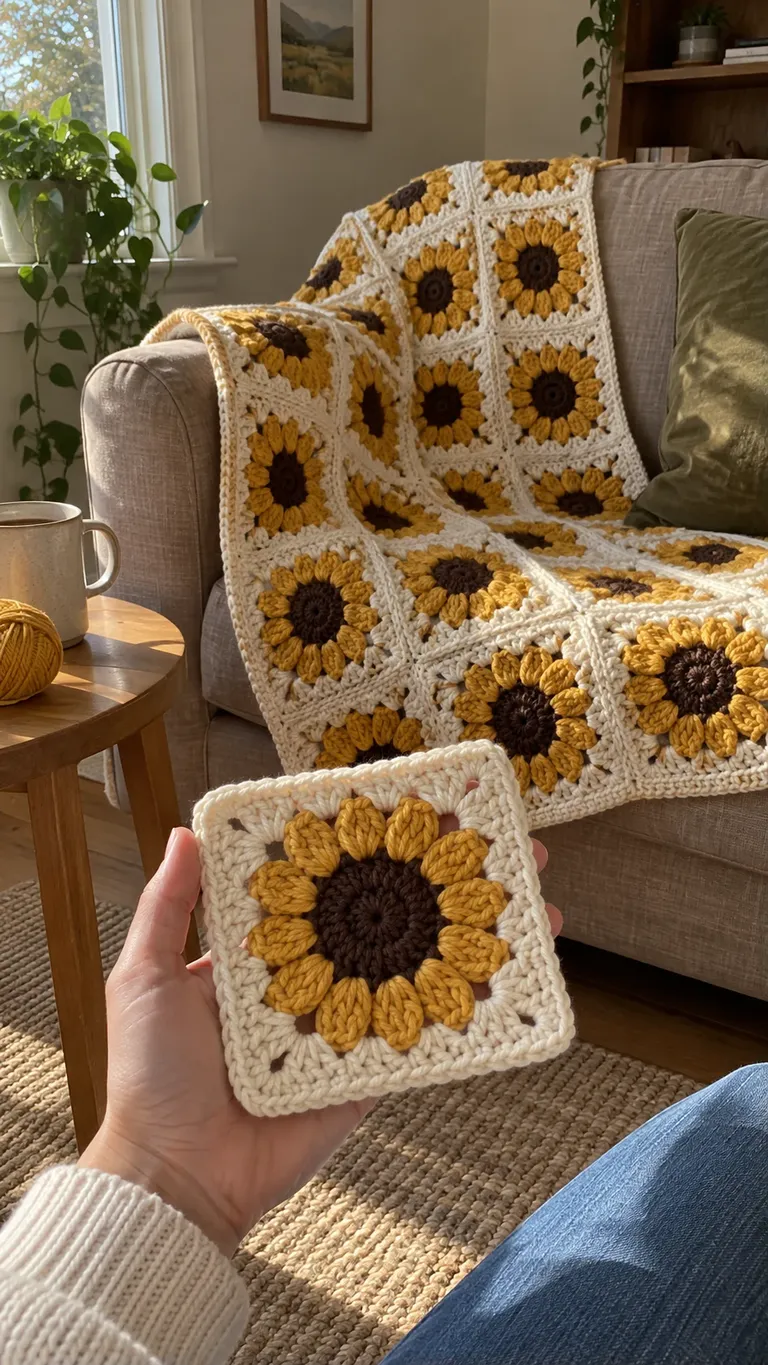
A dark brown center, mustard petals and an ivory surround make each flower stand out without adding another accent color. Repeating the same square gives the throw a clear rhythm across the sofa. The pale seams and narrow border leave the flowers as the main detail.
About this design: The image is an AI-generated design illustration. This guide covers color, layout and sampling; it is not a tested stitch-by-stitch pattern for the pictured sunflower. Choose a complete crochet pattern for the motif, joining method and border. Generated footage should not be used to infer stitch counts or technique.
Choose a complete flower-square pattern
Start with a pattern that explains both the flower and its square surround. A circular flower needs a deliberate transition to four corners; a photograph does not supply the increases, spaces or stitch counts needed for that transition. Read the whole motif before selecting your yarn, including any instructions for raised petals or working into earlier rounds.
This guide uses US crochet terminology. Check the terminology used by your chosen pattern, and consult the Craft Yarn Council abbreviation list for common terms. Follow the pattern's own explanation for any special stitch. Make one complete square, including its final ivory round, before starting a batch.
Compare the three colors in fabric
Place mustard, brown and ivory yarns together in the room where the throw will be used. The brown should read as a distinct center beside the yellow, while the ivory gives the petals space. Check the combination in daylight and under your usual evening light; a color that looks bright in a shop can appear much softer on a taupe sofa.
Use the same yarn range when practical, or compare fiber, thickness and care instructions carefully. Similar labels alone do not guarantee identical fabric. Make the full sample with the actual yarns you intend to use and look at its drape as well as its color.
Keep the floral repeat consistent
Record the yarn color assigned to each round of the selected pattern. Mark the end of a round where the instructions require it, and check the count before moving to the next stage. Petal counts and corner placement come from the pattern, not from counting details in this illustration.
Compare new squares with the first completed sample before weaving in every end. Check their dimensions, visible side and corner orientation. If a square is noticeably smaller or distorted, identify the cause before joining it into the throw. Trying to pull a mismatched square into place can distort the neighboring fabric.
Plan rows using joined measurements
Make and join a small group of squares using the specified method. Include a junction where four squares meet so you can check corner bulk, gaps and whether the ivory lines remain even. Care for the sample according to the yarn instructions, let it dry fully, then measure it without stretching.
Use those measurements to plan the number of rows and columns for your sofa. Include the joins and outer border in the intended size. Lay out the motifs in a grid before assembly, count each row, and photograph the arrangement. If you introduce color variations later, label the rows so the order survives being packed away.
Let the outer border stay quiet
The flowers already supply strong shape and texture. Try a narrow ivory edging from the selected pattern before committing to a deeper or more decorative border. Compare it beside the joined sample and look at the blanket from across the room, where the overall balance is easier to judge.
Follow the pattern's treatment of corners and joining spaces. An edging that cups or ripples needs its stitch placement and tension checked; adding more rounds will not necessarily correct it. Avoid using a fixed number of stitches along every edge unless that number belongs to your pattern and sample.
Finish with useful project notes
Weave in ends securely using a method suitable for the yarn and construction. Follow the yarn label for washing and drying, and avoid applying heat that the fiber cannot tolerate. Check the dry throw on the sofa to see how its weight settles over the arm and seat.
Keep the pattern source, yarn labels, hook size, color order, joined-sample measurements and final row count together. Weighing your own sample and recording your actual yarn use can help with future planning; the illustration cannot establish a reliable yarn quantity.
Before You Start
Keep the flower construction consistent, plan the layout from joined samples and test the border before edging the whole throw.
Pattern FAQs
Does this guide include the exact pictured sunflower pattern?
Standards & Sources
Terms and sizes in this pattern follow these standards.