 Pin it
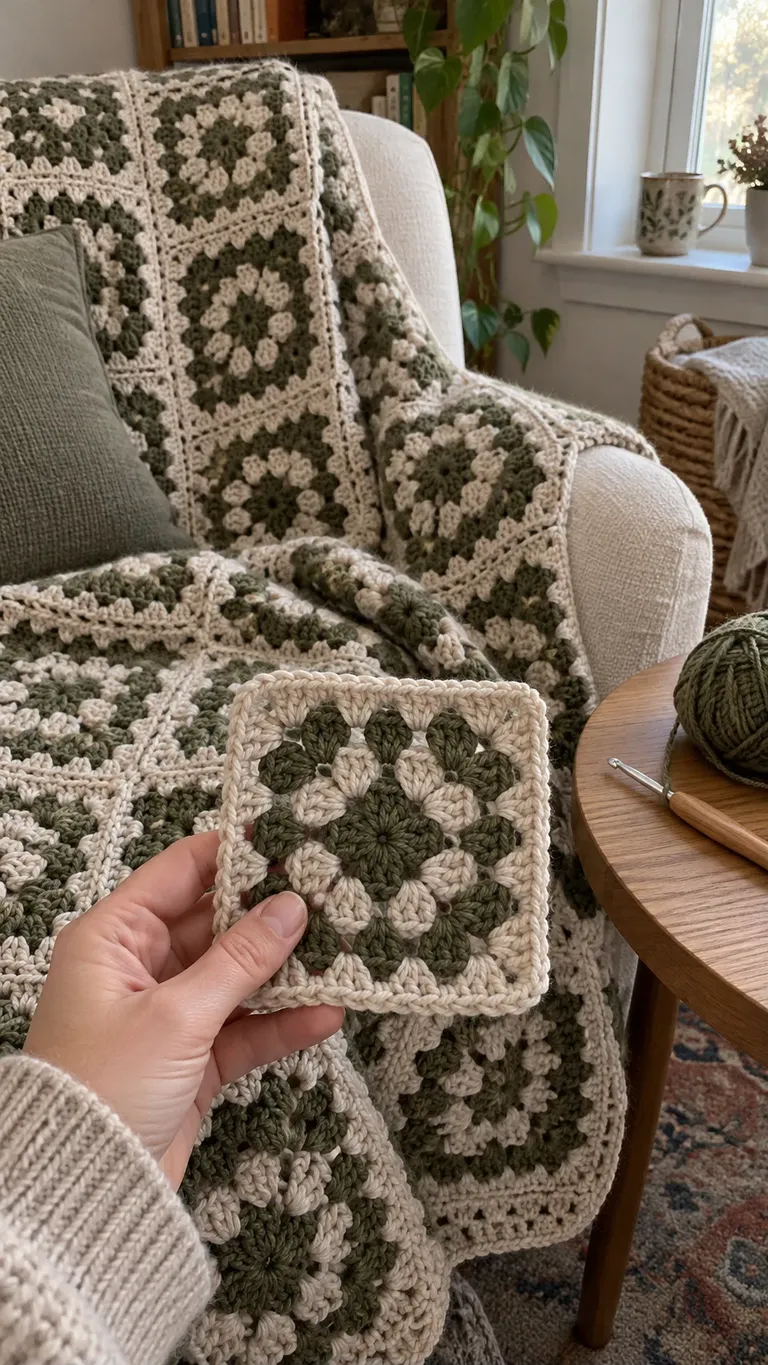
Olive and oatmeal can give a granny-square blanket a quiet, earthy appearance while keeping the clusters easy to see. In this reading-chair design, pale rounds separate the green sections, and a light joining color connects the squares. The useful question is how the two yarns behave together once they become fabric.
About this design: The image and Reel are AI-generated design illustrations. This article is a color and sampling guide, not a tested pattern for the pictured square. Choose a complete granny-square pattern for stitch counts, corners, joins and edging. The Reel's foundation-chain sample shows yarn handling, not construction of the blanket motif.
Choose the construction before the colors
Find a complete pattern with the square size, joining method and border you want. Check whether it uses US or UK crochet terminology. This guide uses US terms; the Craft Yarn Council abbreviation list is a useful reference for common abbreviations. Follow the pattern's own definitions for special stitches.
Use the recommended yarn weight and hook as your starting point, then make the pattern's sample. A loose chain helps you become familiar with a yarn, but it cannot predict the finished square's width or drape. Include the corners and color changes in a complete motif before deciding whether the combination suits the blanket.
Compare lightness as well as hue
Lay the two yarns together in daylight and again beside the reading lamp where the blanket will be used. Some olive shades look browner under warm light, and an oatmeal yarn can range from almost cream to a deeper beige. Choose the actual skeins together instead of relying on color names or separate product photographs.
Look at the finished sample from across the room. You should still be able to distinguish the pale and dark rounds if a clear square pattern is your aim. A grayscale photograph can help you compare lightness, but use it alongside the real sample: a camera's exposure and processing can change the apparent contrast.
Keep the yarn texture in the decision
A smooth yarn makes individual clusters and openings easier to examine than a strongly fluffy yarn. That does not make one texture universally better. Decide whether you want crisp repeated shapes or a softer surface, and judge the sample in the lighting you will use while crocheting.
Compare the two colors in the same yarn range when possible, and check their labels for fiber, weight and care instructions. If you combine different yarns, make and care for a mixed sample first. Notice whether one shade creates thicker clusters, pulls the corners or changes differently after washing.
Test the color order on two squares
Make one square with the pattern's planned olive and oatmeal sequence. For a second sample, reverse the two colors while keeping the stitch instructions unchanged. Place them side by side on the chair and compare how much green and pale yarn is visible. Reversing the colors changes the balance even when the round count stays the same.
Choose one sequence or deliberately alternate the two versions. Write the color beside each round number in your pattern notes. Keep the chosen samples nearby as references so an accidental color change does not disappear into a growing pile of squares.
Include the join in your sample
Join a small group with the method described in your pattern. An oatmeal join can outline the grid; an olive join may make the pale rounds stand out more. Compare the seams from both sides and at normal viewing distance. The join should be a deliberate part of the color arrangement.
Check that the joined group rests comfortably on a flat surface without being pulled into shape. Follow the yarn's care instructions, allow it to dry fully and measure the relaxed group. Use those measurements and the actual border plan to estimate the blanket layout for the chair.
Finish with a record you can reuse
Lay out the squares before assembly and photograph the arrangement. Check for a reversed sequence, a noticeably different size or an unfinished edge. Label rows with removable markers if that helps you keep the layout while joining. Inspect early seams before adding the rest of the blanket's weight.
Finish ends and edging according to the pattern and yarn. Save the yarn labels, hook size, pattern name, color sequence and joined-sample measurements together. Those notes will make a matching cushion or replacement square easier to plan than trying to recover stitch counts from the finished picture.
Before You Start
Choose colors using a complete sample, check the joins and keep yarn and layout notes with the pattern.
Pattern FAQs
Is this a tested pattern for the pictured blanket?
No. This is a color and sampling guide. Use a complete granny-square pattern for stitch counts, joining and edging.
Standards & Sources
Terms and sizes in this pattern follow these standards.